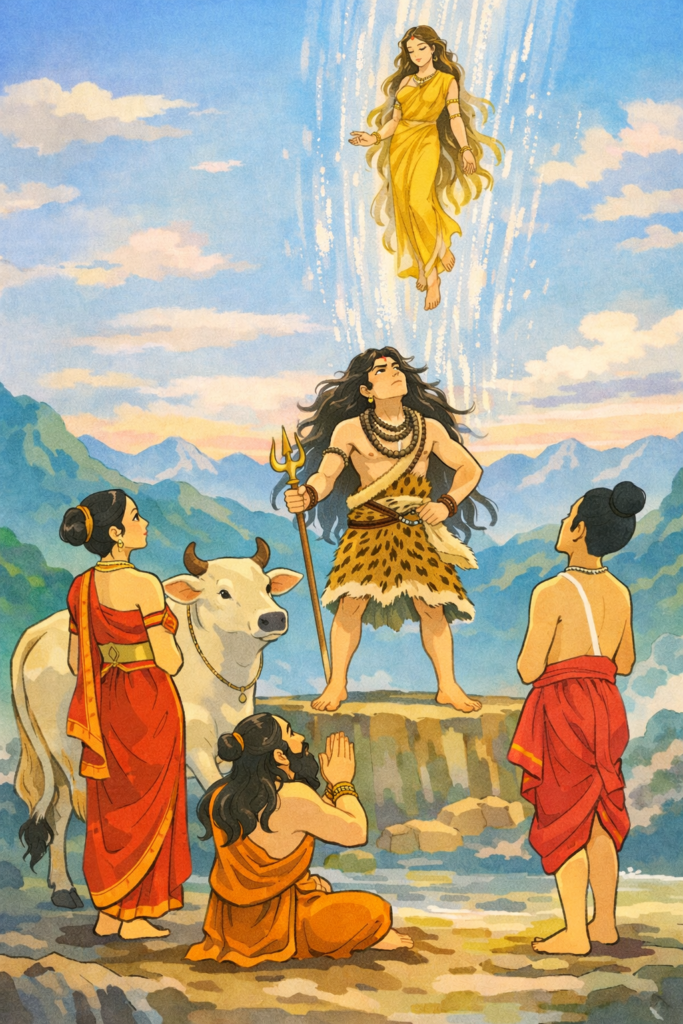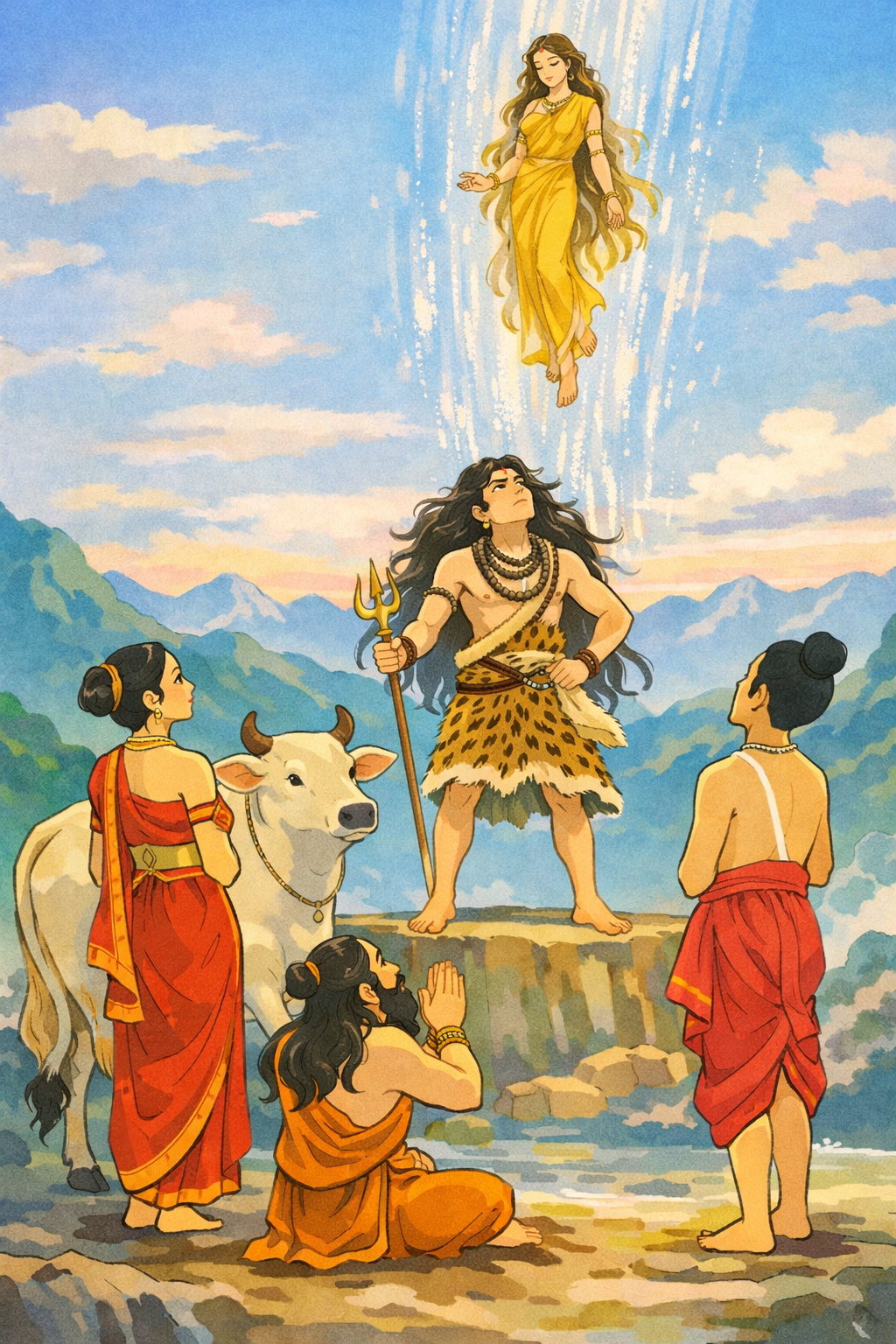
Ganga -The Goddess River | Sagar World Blog
When Ganga came to Earth – Katha Kids
Descent of Ganga – Inspiring Sacred Journey from Heaven
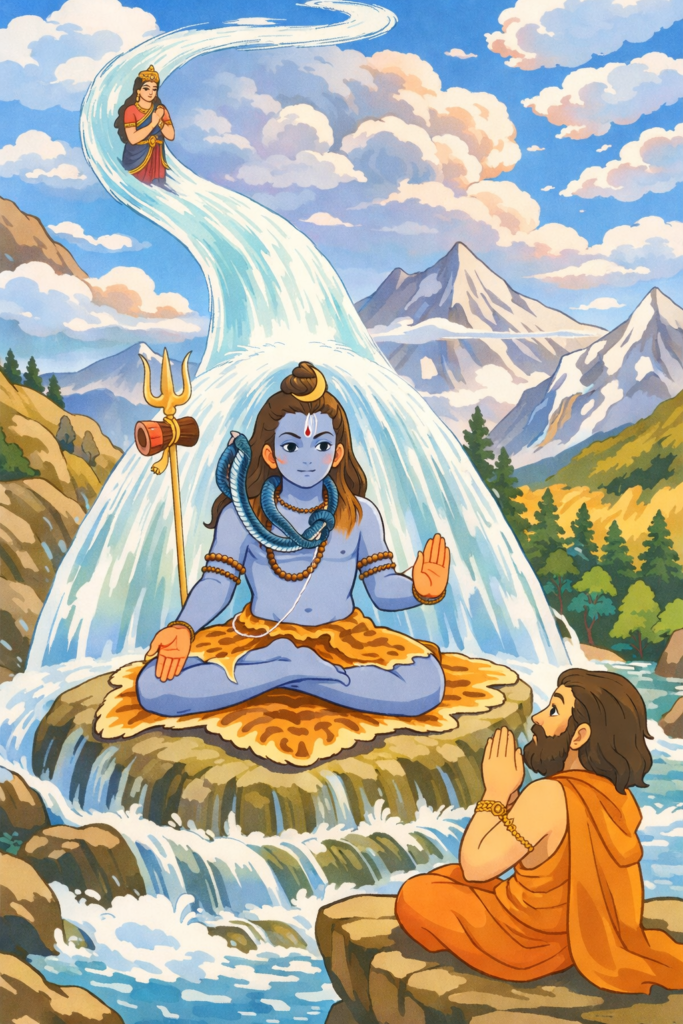
How the Rivers of India Descended From the Heavens: The Ganga | Outlook India
Ganga -The Goddess River | Sagar World Blog

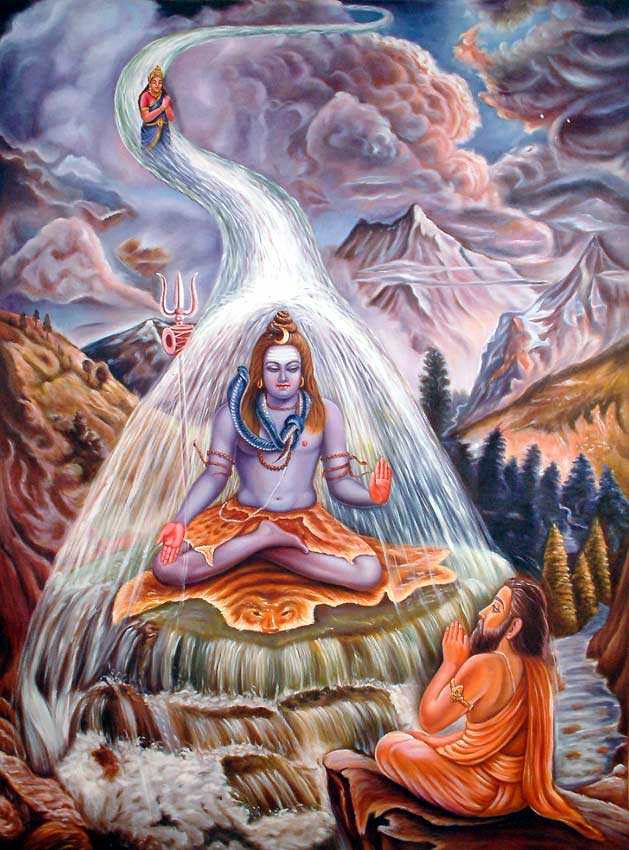
Gangavataran (the descent of Ganga) by Raja Ravi Varma Wikimedia Commons
Ganga – the National River of India, for years, has been an integral part of the historical, religious and cultural heritage of the people of the Sub-continent. Ever since the decline of the Indus Valley civilization, the Ganga and her myriad tributaries have taken the centre stage in the transformation of Indians from small agricultural communities that settled on its banks, nearly four millennia ago, to a nation that is on the threshold of becoming a Superpower, today. In fact the Ganga upholds the virtue of ‘Unity in Diversity’ which is the cornerstone of the Indian culture, as it takes as many as six headstreams (Alaknanda, Dhauliganga, Nandakini, Pindar, Mandakini and Bhagirathi) and five confluences (Vishnuprayag, Nandprayag, Karnaprayag, Rudraprayag and Devprayag) to form the mainstream of the mighty river. In fact the many symbolic meanings of the river on the Indian Sub-continent were spoken to in 1946 by Jawaharlal Nehru in his book – ‘The Discovery of India’
“The Ganges, above all is the river of India, which has held India’s heart captive and drawn uncounted millions to her banks since the dawn of history. The story of the Ganges, from her source to the sea, from old times to new, is the story of India’s civilization and culture, of the rise and fall of empires, of great and proud cities, of adventures of man
Although geologists believe that the Ganga, along with its mythical father, the Himalayas, was born as a consequence of the collision of the Indian and the Asian plates around fifty five million years ago, the Puranas give various versions for the birth of the river. According to one version, the Ganga was born when the sacred water from Lord Brahma’s kamandalu became personified as a maiden. The Vaishnavas believe that the Brahma had reverently washed the feet of Lord Vishnu’s fifth avatar – Vamana, and collected the water in his kamandalu. According to a third version, she was the daughter of Himavan, King of the Mountains, and his consort Mena, and thus a sister of the Goddess Parvati. However, all accounts declare that she was raised in the heavens, under the tutelage of Lord Brahma.
Several years later, a king named Sagara of the Suryavamsa or Solar dynasty, ascended the throne of Kosala. He had sixty thousand sons from his wife, Sumati and one son, named Asmanjan from his other wife, Kesini, whom he later abandoned for being wild and wicked. When the king chose to perform the Ashwamedha Yagna, his royal agents lost the track of the sacrificial horse. According to one version, the horse was stolen by the jealous Indra, who did not want the Yagna to succeed and hid it in a cave where Rishi Kapila was meditating in order to escape being accused of stealth. Sagara ordered his sixty thousand sons to track down the horse. The proud and mercurial princes raged across Bharat, burning down forests and uprooting life and property to find the horse. They finally arrived at the quiet spot where the great sage was sitting in meditation. Besides him, was tied the white sacrificial horse. Thinking that the sage had abducted the horse, the enraged princes condemned the Rishi as a thief started hurling abuses at him. The powerful Kapila who had not opened his eyes for several years turned the princes to ashes using his mystic powers.
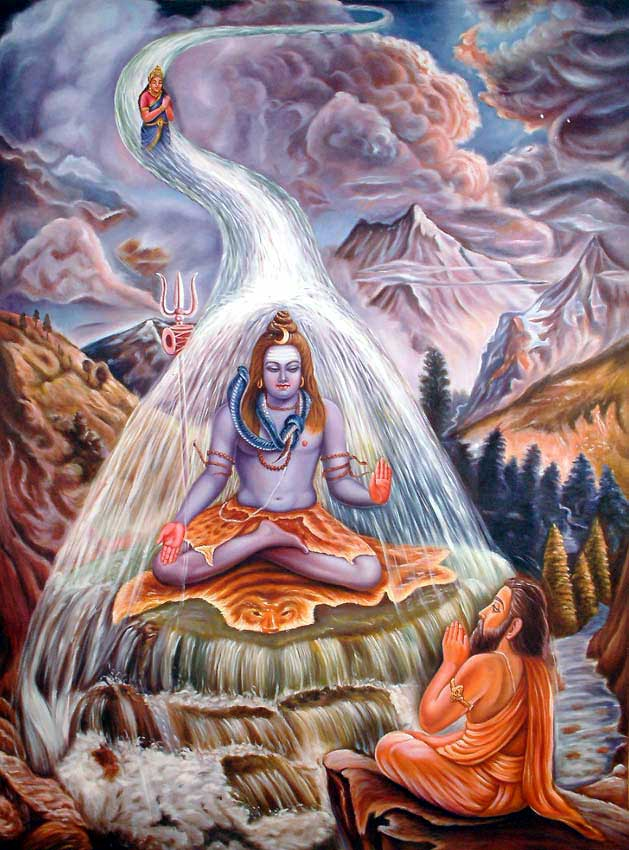
(Other names: Ganges, Bhagirathi, Jahnavi, Mandakini)
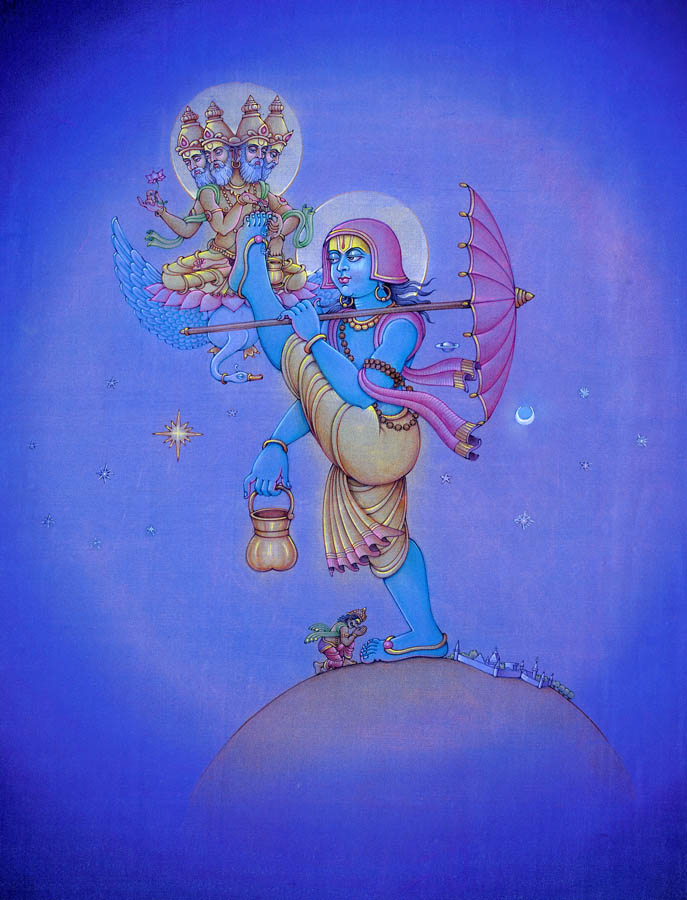
Ganga, the most holy river of India starting from Gomukh, a place in the Himalayas, meets the sea in the Bay of Bengal near Ganga Sagar. According to one belief, the origin of Ganga was from the toe nail of Lord Vishnu.
That is why she is also called ‘Vishnupadi’ which means “Emanating from the Lotus feet of Supreme Lord Sri Vishnu.”. There are several Hindu beliefs that give various versions of the birth of Ganga.
According to one version, the sacred water in Brahma’s Kamandalu (water-vessel) became personified as a maiden, Ganga.
According to another (Vaishnavite) legend, Brahma had reverently washed the feet of Vishnu and collected this water in his Kamandalu.
According to yet a third version, Ganga was the daughter of Himavan, king of the mountains, and his consort Mena; she was thus a sister of the goddess Parvati. Every version declares that she was raised in the heavens, under the tutelage of Brahma.
According to the Bhagawat Puran Katha, King Sagar’s sixty thousand sons who were burnt to ashes because of the curse of Sage Kapil.
For their deliverance, King Sagar’s great grandson Bhagirath observed penance and brought Ganga from heaven to earth. That is why Ganga is known as ‘Bhagirathi’.
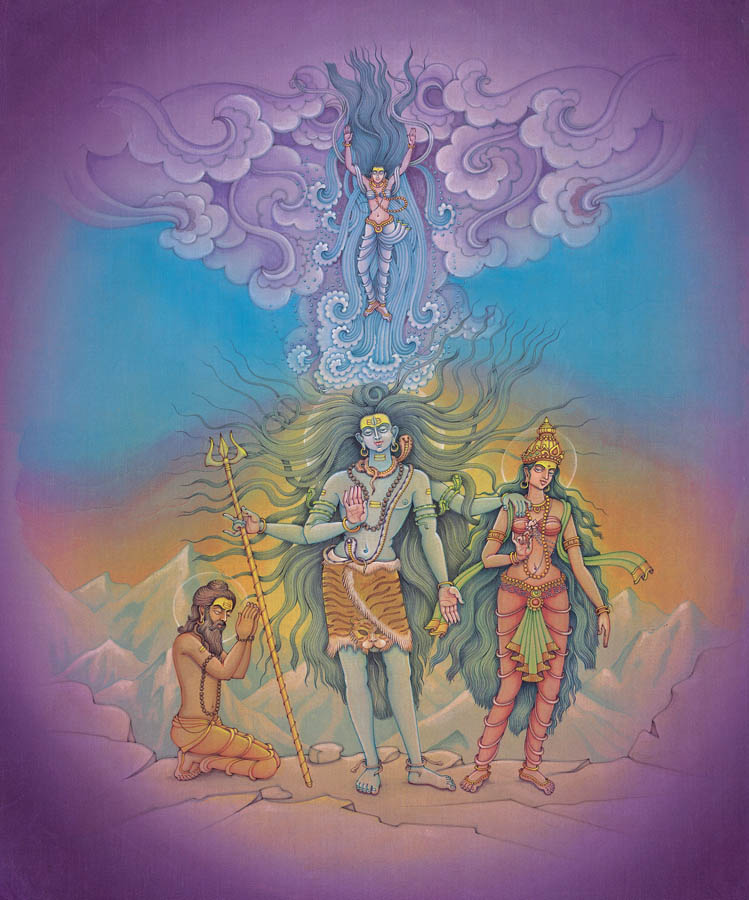
Vishnu instigated Ganga to go to earth for the deliverance of Sagar’s sons – Then Ganga asked him as to how long will she have to line on earth?
Vishnu told her, “Till 5000 years of Kalyug you will have to live on earth and the sea that is a part of me, will be your husband.
Those who will bathe in your holy water will attain happiness and merit.” At the time of Ganga’s landing on the earth, to control her impact, Shiva held her in his matted hair.
From Shiva’s matted hair Ganga came to earth reducing her speed and liberated King Sagar’s sons.
Ganga is also called ‘Tripathaga’ because according to Puranas she has three streams – Swarnaganga (Mandakini), Bhuganga (Bhagirathi) and Pataalganga (Bhagwati).
The Hindu epic, Mahabharata tells that the Vasus who were cursed by Vashishta had requested Ganga to be their mother.
Ganga incarnated and became the wife of King Shantanu on a condition that at no stage shall he question her actions, or she would leave him.