
The eleven senses, or indriyas, are categorized into five organs of perception (Jnanendriyas) and five organs of action (Karmendriyas), with the eleventh being the mind (Manas), which connects the two. The Jnanendriyas are the eyes, ears, nose, tongue, and skin, while the Karmendriyas are the hands, feet, mouth, genitals, and anus. The mind is a crucial, overarching faculty that both receives sensory input and directs actions.
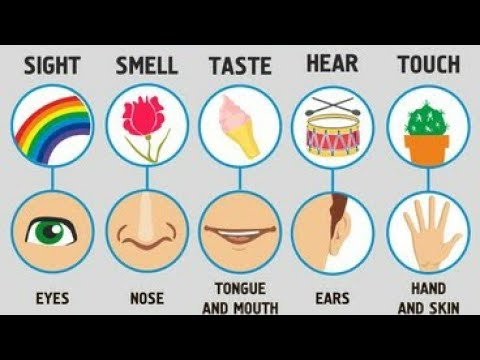
The five organs of perception (Jnanendriyas)
- Ear: Responsible for hearing (sound)
- Skin: Responsible for touch (feeling pressure, texture, temperature)
- Eyes: Responsible for sight (vision)
- Tongue: Responsible for taste
- Nose: Responsible for smell (odor)
The five organs of action (Karmendriyas)
- Hands: For dexterity and grasping
- Feet: For locomotion
- Mouth: For speech (as well as eating)
- Genitals: For reproduction
- Anus: For excretion
The eleventh sense (Manas)
- Mind (Manas): The eleventh sense, which acts as an internal faculty that connects the sensory organs with the organs of action. It processes the information received by the Jnanendriyas and makes decisions before the Karmendriyas act.
Bhagavad-gita As It Is
BG Chapters 13 – 18
Including the mind, there are eleven senses altogether.
From all the authoritative statements of the great sages, the Vedic hymns and the aphorisms of the Vedānta-sūtra, the components of this world can be understood as follows. First there are earth, water, fire, air and ether. These are the five great elements (mahā-bhūta). Then there are false ego, intelligence and the unmanifested stage of the three modes of nature. Then there are five senses for acquiring knowledge: the eyes, ears, nose, tongue and skin. Then five working senses: voice, legs, hands, anus and genitals. Then, above the senses, there is the mind, which is within and which can be called the sense within. Therefore, including the mind, there are eleven senses altogether. Then there are the five objects of the senses: smell, taste, form, touch and sound. Now the aggregate of these twenty-four elements is called the field of activity. If one makes an analytical study of these twenty-four subjects, then he can very well understand the field of activity. Then there are desire, hatred, happiness and distress, which are interactions, representations of the five great elements in the gross body. The living symptoms, represented by consciousness and conviction, are the manifestation of the subtle body-mind, ego and intelligence. These subtle elements are included within the field of activities.