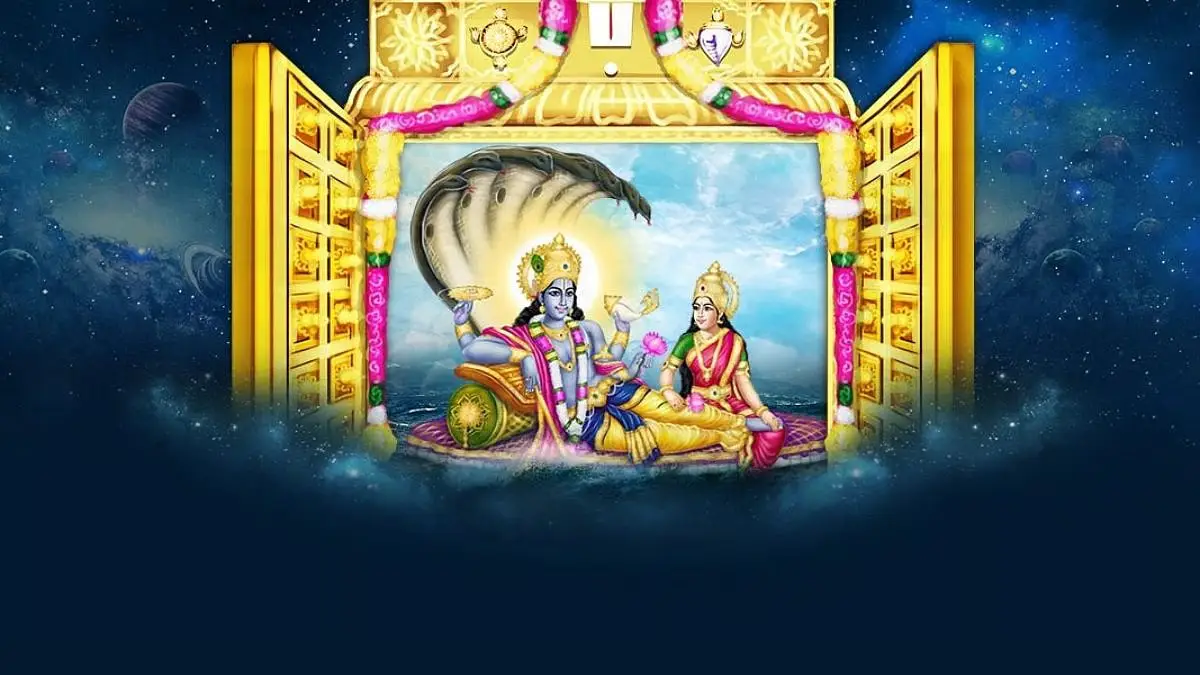
Vaikuntha Ekadashi 2025: A one-day fast believed to equal the spiritual merit of many lifetimes
Today marks Vaikuntha Ekadashi, one of the most sacred days in the Hindu calendar and the final Ekadashi of the year. Across temples and homes, devotees are observing the vrat with fasting, prayers and quiet reflection. In many Vaishnavite temples, the Vaikuntha Dwaram has been opened, symbolising the path to Vishnu’s abode, while chants, poojas and night vigils continue well into the early hours.
Because this is the last Ekadashi of the year, the day carries extra weight. For many devotees, it feels like a closing note. A final chance in the year to pause, reset, and consciously invite Lord Vishnu’s blessings before the cycle turns again.

The significance of the Vaikuntha Ekadashi vrat
A fast believed to equal many lifetimes of effort
A core belief associated with Vaikuntha Ekadashi is that fasting on this single day carries the spiritual merit of many lifetimes of tapasya. The day is believed to occur when cosmic energies are especially receptive, making even imperfect fasting spiritually effective. Rather than being seen as a routine observance, it is regarded as a rare alignment with long-term karmic impact. The emphasis is not on enduring hunger, but on gently redirecting the soul’s path.
The body as the Vaikuntha Dwaram
While temples open the Vaikuntha Dwaram, tradition says the symbolism goes deeper. The body is believed to mirror the temple itself. Through fasting, the inner gate is purified. When digestion rests, awareness is said to move upward. In this belief, the true Vaikuntha Dwaram opens within, not only in stone sanctums.
How hunger deepens devotion
Ancient texts and long-held practices suggest that digestion uses a great deal of mental energy. When food intake is reduced, that energy is believed to turn inward. Many devotees speak of sharper focus, vivid dreams, inner calm or emotional clarity. This is why night-long vigil, bhajans and the repetition of Vishnu’s name are given greater importance than strict food rules.
Why the night matters more than the day
An unusual belief linked to this Ekadashi is that the merit of fasting increases when one stays awake through the night. Vishnu is believed to remain awake for devotees on this occasion. Symbolically, ignorance rests while awareness stays alert. The stillness of the night, combined with fasting, is said to create a deeper inner silence.
Releasing accumulated karma
Vaikuntha Ekadashi is also associated with the burning of stored karma, not just daily actions but sanchita karma gathered over many births. Fasting on this day is believed to weaken deep-rooted habits and desires. Even a brief pause in craving is viewed as a glimpse of freedom.
Ancient insight into body and cosmos
Though expressed spiritually, many see practical wisdom behind the observance. The lunar cycle is believed to influence water content in the body, and Ekadashi often falls when digestion is naturally weaker. Fasting is thought to reduce toxins, leading to mental clarity and deeper devotion. Ancient traditions tied biology, astronomy and spirituality closely together.
How the Vaikuntha Ekadashi vrat is observed
There is no single right way. Some devotees observe a complete fast, others take fruits, milk or water. Many also practise mental restraint, avoiding anger, gossip or unnecessary distraction. Visiting a Vishnu temple, listening to sacred texts, chanting, or simply moving through the day with awareness are all considered meaningful.
In the end, intention matters more than method. The vrat is less about what is avoided and more about what stays in focus.